 About UsToursAttractionsConsultationsContact Book Now
 Journey to the green north of the island - from tropical forests and hidden waterfalls to a lakeside temple and UNESCO rice fields. Fewer tourists, more authenticity.
We drive along local roads through small towns and rural areas, where you can observe the carefree rhythm of daily life: women carrying and placing offerings at homesteads and temples, men working in the fields or resting after hard labor, and small traders bustling about at bazaars and shops.
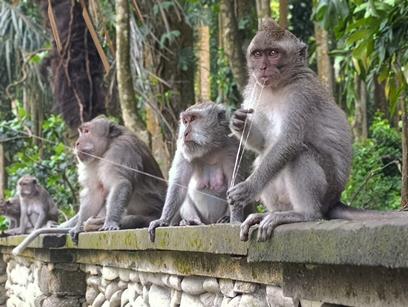
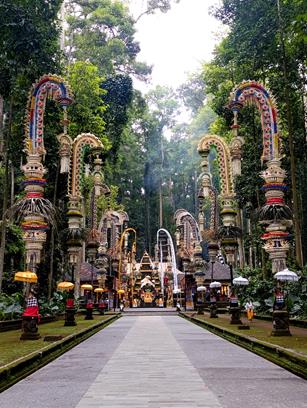
A visit to the sacred monkey grove sanctuary of Bukit Sari Sangeh, inhabited by long-tailed macaques and overgrown with massive pala trees reaching 40 meters. The nature reserve contains 4 temple structures, the oldest of which, Pura Puncak Sari, dates from the 17th century. At the forest entrance stands an impressive monument of the monster Kumbakarna, brother of the demon king Rawana from the legendary Ramayana epic. Monkeys hold a special place in Hindu beliefs and Balinese culture — they appear in literature, dances, and sculptures, which is why the Balinese treat them with due respect and reverence.
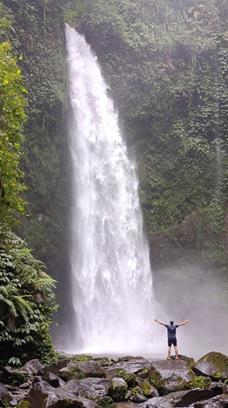
Continuing northward, we notice gradual changes in the surroundings: the flat, rice-paddy-dominated scenery gives way to highland and distinctly mountainous terrain, lushly overgrown with rainforests and hillside plantations. Heading to the off-the-beaten-path Nungnung waterfall, we encounter various tropical trees along the way (cacao, banana, coffee, clove, cinnamon, durian, breadfruit) as well as marigold bushes used by Hindus for prayers and ceremonies. After descending several hundred steps through the jungle, all signs of fatigue vanish when we hear the incredible roar of water, and a mighty cascade appears before our eyes, plunging dozens of meters into a rock-enclosed basin where those who wish can take a refreshing swim.
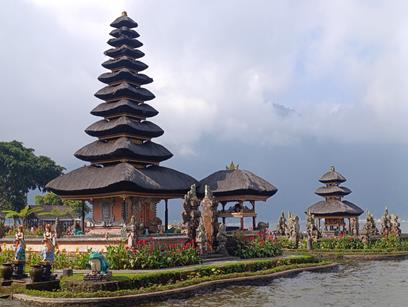
Pushing through mountain back roads heading north, we reach the land of great lakes, part of the geological Catur caldera. The next tour stop is planned in the recreational town of Bedugul on Lake Bratan, which fills the crater of an extinct volcano. There, on the shore of this body of water, stands Pura Ulun Danu Bratan, the “mother” temple for all Balinese temple structures dedicated to agriculture, unanimously considered one of the most recognizable icons of the island.
Rice cultivation and agriculture in general have a religious character and dimension, which is why temples associated with this profession are built along the irrigation system leading from lakes and rivers through canals, dams, and dykes to individual rice plots. The inland landscape of Bali is dominated and shaped by the peaks of ancient, mostly dormant volcanoes.
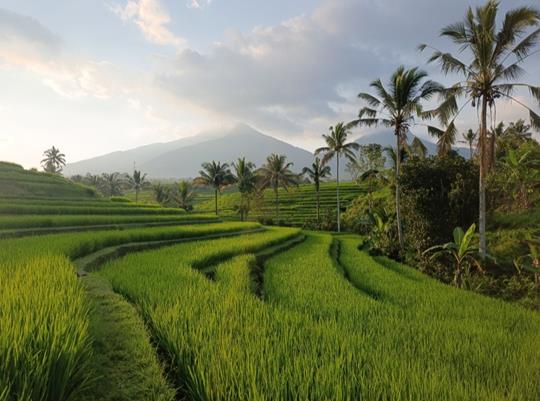
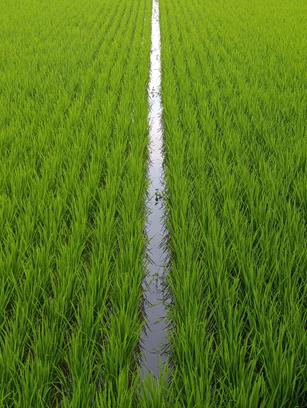
Seeking authentic Balinese landscapes from the old days, we turn off the main route onto little-traveled and often bumpy paths leading into the island's interior, where traditional household structures, village buildings, temples, and shrines catch the eye. Along this trail, we head toward the largest rice field region in Bali — Jatiluwih, located in the heart of the Tabanan regency, the island's biggest rice granary, where cool mountain air mixes with warm sea breezes. Incredibly vast and intensely colorful stretches of terraces descend from the slopes for kilometers toward the coast. This area, as a manifestation of the Tri Hita Karana philosophy, was inscribed on the UNESCO World Heritage List in 2012. The rice fields can be explored along several very scenic walking paths.
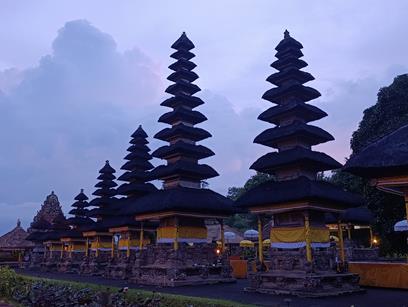
In the evening, we reach yet another UNESCO monument, which at this time of day will be practically deserted. Taman Ayun literally means beautiful garden; it is surrounded by two moats and, thanks to its clear division into 3 courtyards, perfectly mirrors the Hindu universe. The inner zone of the temple is famous for its fantastically arranged row of multi-tiered meru towers, which for the former rulers of the Mengwi kingdom served as a “remote representation” of the most important religious sanctuaries on Bali.
Finally, on the way back to the hotel, we suggest a visit to the renowned Junglegold chocolate factory, where those interested can sample various unique varieties of this specialty and purchase items at factory prices.
Tour ends after dusk at around 6:30 PM